How I Built Speakify in 3 Weeks
A deep dive into building a TTS SaaS with 300+ voices and 50+ languages — from idea to launch.
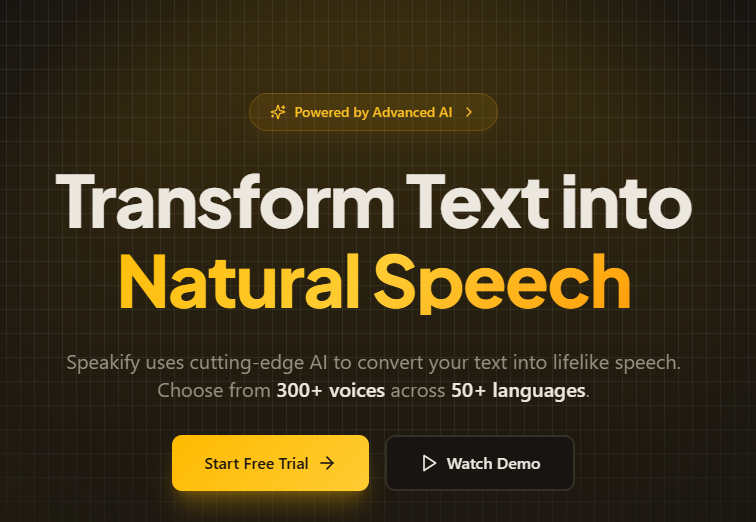
How I Built Speakify in 3 Weeks
Building a SaaS product from scratch and shipping it in under a month sounds crazy. But that's exactly what happened with Speakify — a text-to-speech platform that now supports 300+ voices across 50+ languages.
Here's how it went down.
What is Speakify?
Speakify is an AI-powered text-to-speech SaaS. You paste in text, pick a voice and language, and get natural-sounding audio back. It's built for content creators, educators, and developers who need high-quality TTS without the complexity of raw APIs.
Try it yourself: speakify.eu.org
The Tech Stack
I went with a split architecture:
- Frontend: Next.js with Tailwind CSS — fast to build, great DX
- Backend API: FastAPI (Python) — handles the heavy lifting of TTS processing
- Database: PostgreSQL via Neon — serverless, scales to zero
- Deployment: Vercel for frontend, VPS for the FastAPI backend
Why FastAPI for the backend?
The TTS processing is CPU-intensive. Python has the best ecosystem for AI/ML tasks, and FastAPI gives you async support out of the box. The type hints + automatic OpenAPI docs are a massive productivity boost.
The Build Timeline
Week 1: Core Engine
The first week was all about getting the TTS pipeline working. I integrated multiple TTS providers to offer variety in voices. The key insight was abstracting the provider layer — each TTS service implements the same interface, so adding new providers is trivial.
class TTSProvider:
    async def synthesize(self, text: str, voice: str) -> bytes:
        raise NotImplementedError
Week 2: Frontend + API
Week two was building the user-facing product. Next.js made this fast. The main challenges were:
- Audio streaming — sending audio back to the client efficiently
- Voice browser — making 300+ voices searchable and filterable
- Rate limiting — preventing abuse without hurting UX
Week 3: Polish + Launch
The final week was all about:
- Error handling and edge cases
- Loading states and feedback
- SEO and meta tags
- Writing docs
- Setting up monitoring
Lessons Learned
1. Ship the MVP, then iterate
I launched with 50 voices. The remaining 250+ came in updates over the following weeks. If I'd waited for "complete," I'd still be building.
2. Abstractions pay off early
The provider abstraction I built in week 1 saved me dozens of hours later. When I added a new TTS provider, it took 30 minutes instead of 3 days.

Comments
Lovable Leaks Source Code: The $6.6B BOLA Vulnerability
An 8 million user platform ignored a critical BOLA vulnerability for 48 days. How a $6.6B AI app builder leaked source code, credentials, and user data.
Google Released Gemma 4 for Free. Here Is Why That Makes Sense.
Gemma 4 dropped April 2, 2026 under Apache 2.0 with full commercial rights. This is what the architecture actually does and what Google is really after.
Build a Full Stack App for Under $5 Per Month
Learn how to build and deploy a full stack app using Next.js Supabase Railway and Cloudflare for under $5 per month. Beginner friendly step by step guide.
Tagged