Loading...
← Back to Prompts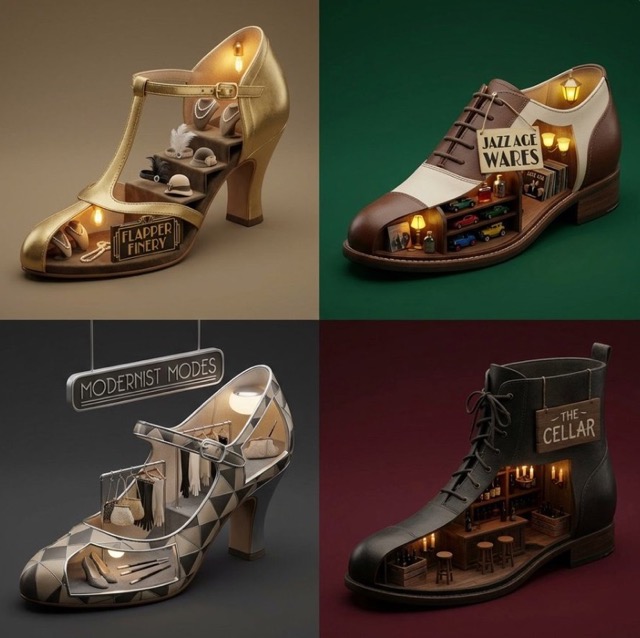
Surreal Retail Fashion History Dioramas
Nano Banana Procreativeartstyle+2 more
Nano Banana ProcreativeartstylePhotorealistic3D Art
Works With
Nano Banana Pro
May 14, 2026
0Views0Likes0Shares
Prompt
<instruction> Do this for 1920 1. Inference Engine Input A is a Specific Historical Era (e.g., The 1920s, The 1980s, The Victorian Age, The Future). Analyze the era to generate 4 Footwear Assets : The Shoe Style: Identify the defining shoe silhouette of that time. (e.g., 1920s -> T-Strap Heel. 1980s -> High-Top Sneaker. Victorian -> Button Boot). The Inventory: Identify the fashion accessories sold in that era. (e.g., 1920s -> Pearls, Headbands. 1980s -> Cassettes, Neon clothes. Victorian -> Cameos, Lace gloves). The Signage: Identify the typography and advertising style. (e.g., Art Deco Gold, Neon Tubing, Hand-painted Serif). The Lighting: Identify the ambient lighting technology. (e.g., Gaslamp, Fluorescent, Incandescent). 2. Container Goal: "Fashion History" Surreal Retail. Format: A 2x2 Grid Composition. The Concept: Each panel represents a different "Era Store" derived from the input (or 4 variations if the input is a single broad era). The Object: A single shoe from that era, modified into a cutaway diorama. 3. The Interior The Renovation: The interior of the shoe is fitted with period-accurate shelving and flooring. Victorian: Velvet and Mahogany. 1980s: Chequerboard tile and slat walls. The Stock: The shelves are filled with the "Inventory" (Step 1). The Sign: A miniature period-appropriate sign hangs off the shoe's ankle or tongue. 4. Visual Syntax Color Palette: The background color of each panel reflects the era's palette (e.g., Sepia for 1800s, Hot Pink for 1980s). Lighting: The interior shop lights must match the "Lighting" inference (Warm yellow vs. Harsh white). Output: ONE image containing a 2x2 Grid, 1:1 Aspect Ratio, 3D Render, "Dollhouse" aesthetic, High Texture Fidelity. </instruction>
What This Prompt Creates
<instruction> Do this for 1920 1. Inference Engine Input A is a Specific Historical Era (e.g., The 1920s, The 1980s, The Victorian Age, The Future). Analyze the era to generate 4 Footwear Assets : The
Best Used For
nano_banana